
TMT Bars 6 min read
Fe 500 vs Fe 500D vs Fe 550D: which grade for your house?
They all carry the same 500 MPa yield strength. What separates them is ductility — and that is the property that decides whether a bar bends or snaps.
TMT Bars 6 min read
They all carry the same 500 MPa yield strength. What separates them is ductility — and that is the property that decides whether a bar bends or snaps.
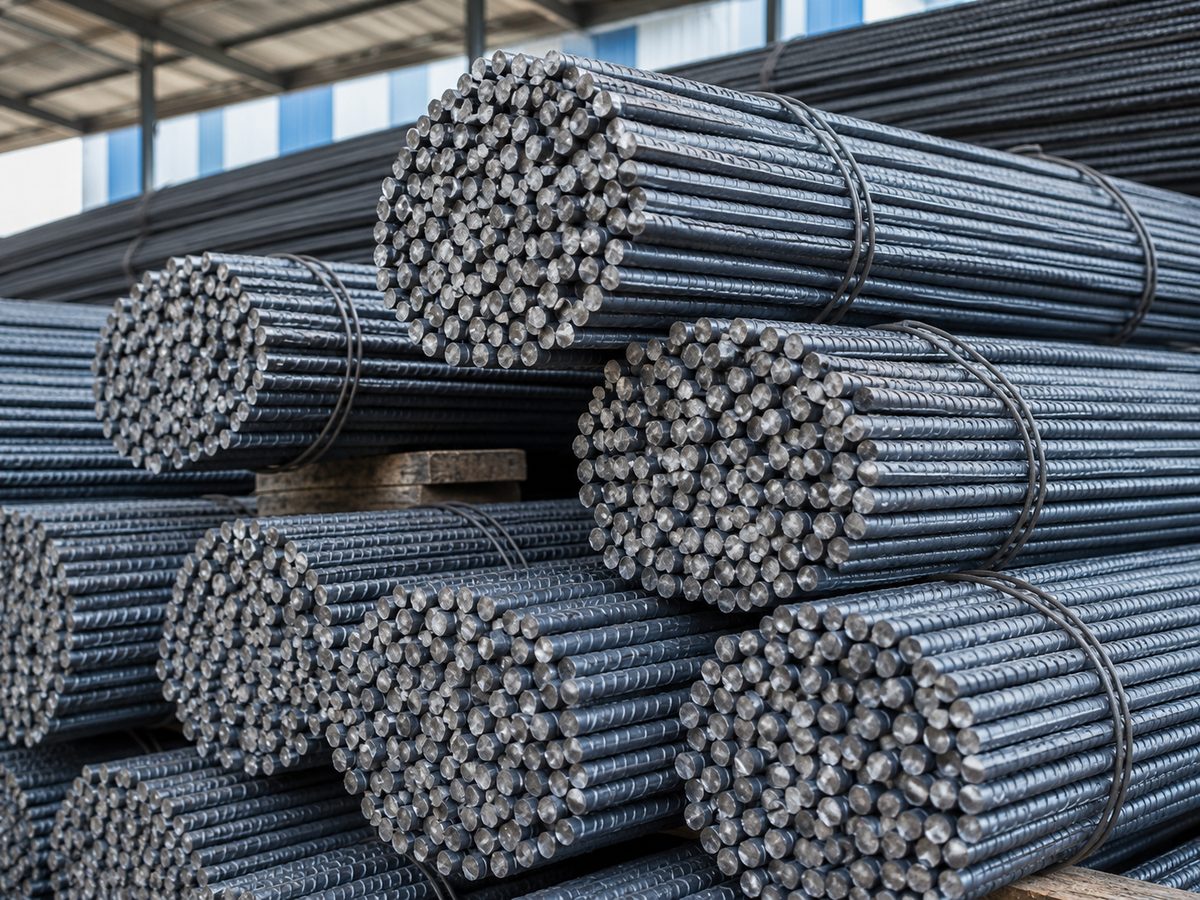
For a one to three storey house, Fe 500D is the sensible default. It has the same 500 MPa yield strength as plain Fe 500 but tighter limits on sulphur and phosphorus and a higher minimum elongation, so the bar deforms before it fails. Fe 550D is worth the money only on heavily loaded columns. Within about 20 km of the coast, ask for the corrosion-resistant (CRS) variant of whichever grade you choose.
The number in Fe 500 is the minimum yield strength in megapascals — the stress at which the steel starts to deform permanently. Fe 500 and Fe 500D are identical on that count. Fe 550D is 10 per cent stronger, which is why engineers reach for it when a column is carrying a lot of load and they want to keep the bar count down.
D stands for ductility. IS 1786 sets tighter ceilings on sulphur and phosphorus for the D grades and demands a higher minimum elongation. In practice that means the bar bends cold without cracking, absorbs movement, and gives visible warning before it fails rather than snapping. On a site where stirrups and cranked bars are bent by hand, that is not a theoretical advantage.
Fe 500D covers almost every residential job in this district. Plain Fe 500 is adequate for compound walls, sheds, outbuildings and farm structures where the loads are light and the consequences of failure are small. Fe 550D belongs on multi-storey and commercial work, and only where the engineer has designed for it — putting it in a compound wall lifts the bill and achieves nothing.
Salt air attacks reinforcement through the cover concrete. If you are building anywhere near Kumta, Honnavar or the Gokarna belt, specify the CRS (corrosion-resistant) variant. It costs a little more per tonne and it is the difference between a structure that lasts fifty years and one that starts spalling in fifteen.
No. Every branded TMT bar sold to IS 1786 meets the same yield and elongation limits, and the nominal weight per metre is identical across brands. What brand buys you is consistency between batches, a tighter rolling tolerance, a rib pattern that bonds properly, and a mill test certificate you can actually ask for.
02 FAQ
Yes — 550 MPa minimum yield against 500 MPa, so about 10 per cent stronger. But both are D grades, so both have the higher ductility. Use Fe 550D where the engineer has designed for it, not as a general upgrade.
Keep to one grade per structural element. Mixing grades within a single column or beam is poor practice; using Fe 500D for the frame and plain Fe 500 for a boundary wall on the same plot is perfectly normal.
The grade is rolled into the bar surface, and for branded stock you can ask for the mill test certificate for that batch. Ask before delivery, not after.
— Get started
Quality materials, trusted brands and reliable supply — from one counter in Sirsi, delivered across Uttara Kannada.